Dreams and premonitions
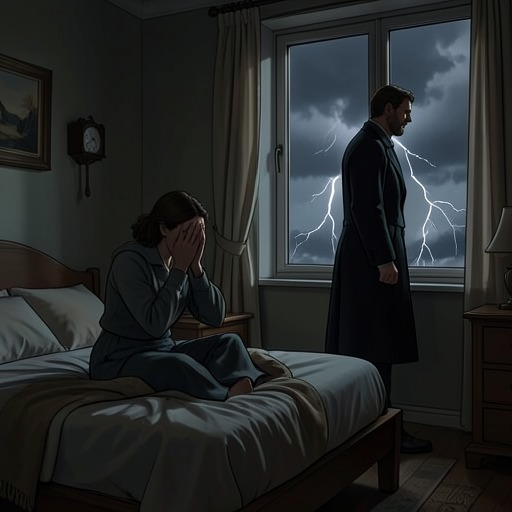
The Chemistry of DeathDreams and premonitions in the novel offer no dependable map of the future. Instead, they expose what characters fear, grieve, or struggle to recognize, while leaving open whether an intuition has any force beyond the mind that experiences it. Linda Yates dreams of Sally Palmer vanishing; David Hunter repeatedly dreams of the family he has lost; and, during the investigation, a scent he had barely registered returns to his awareness as a concrete clue. Together, these episodes connect dreams to bereavement and to the uncertain work of interpreting evidence, without establishing that any dream is supernatural foreknowledge.
Linda Yates’s Dream of Sally Palmer
Linda Yates tells David Hunter that she has dreamed about Sally Palmer. In the dream, Sally stands crying at a bus stop. Linda asks what is wrong, but Sally does not answer; when Linda looks away down the road and turns back, Sally has disappeared. Linda treats the dream as meaningful, insisting that dreams happen for a reason. Her certainty contrasts with David’s caution: he points out that they do not yet know who is missing, and that it could be anyone.
The dream acquires an unsettling context when the investigation establishes that Sally has not been seen since the pub barbecue. She had failed to collect a grocery order she was due to pick up the following day and had also stopped visiting the newsagent for her daily newspaper. Yet nobody had reported her missing. Neighbours assumed she had gone away or was absorbed in her writing, and the newsagent regarded her as not really local. The gap between Linda’s private alarm and the community’s failure to notice Sally’s absence sharpens the dream’s force, but does not prove that it predicted events: the account does not establish when Linda dreamed it in relation to Sally’s disappearance, or what knowledge might have informed it.
David Hunter’s Recurring Family Dreams
David’s own dreams return him to Kara and Alice, his wife and six-year-old daughter, who died in a car crash. They are not frightening in the ordinary sense. In them, his family remains alive, and he can see, speak to, and touch them; their life together seems to have a future rather than existing only in memory. The pain lies in waking and finding that the dream’s version of the family cannot be sustained.
The dreams recur in a setting that David has never encountered while awake: a house that he knows does not exist, yet feels like home. There, ordinary conversation about his day restores the familiar texture of family life. This domestic normality makes the return to loss especially severe. On one occasion, David wakes confused and distressed beside an open bedroom window; the intensity of the dream briefly makes waking seem less real than what he has just experienced. The repetition gives grief a structure: the same imagined refuge is revisited, and each return ends in renewed recognition that Kara and Alice are dead.
Conviction, Grief, and the Limits of Meaning
David thinks back to Linda’s belief that dreams have a reason and wonders what she would make of his own. He can imagine psychological explanations, including the kind Henry might offer, but finds that they do not neatly account for the dreams’ felt reality. A part of him resists accepting that they are only dreams. The possibility of treating them as a route back to his family frightens him, because he understands that death would be an act of despair, not love. More frightening still is his recognition that, at times, he does not care about that distinction. The dreams therefore reveal not a solution to bereavement but the danger of allowing longing to masquerade as a promise.
Jenny Hammond’s captivity supplies a stark contrast between dream and anticipation. As her condition worsens, she thinks that it would be better if death came before her captor returned. This is not presented as a premonition or a dream; it is a bleak expectation formed under immediate threat. Its place beside David’s dream-driven longing underscores how different kinds of anticipation can arise from distress without offering reliable knowledge of what will happen.
Subconscious Recognition and Investigative Evidence
The novel also links the language of premonition to David’s belated recognition of a physical clue. At Tom Mason’s house, David notices thick black smears around a bedroom doorframe and a wad of newspaper coated with the same sticky material. He identifies it as bitumen. The discovery brings back a faint smell he had registered earlier in the churchyard, amid the scent of flowers and cut grass, but had not attended to. The clue seems to have remained at the edge of awareness until the new evidence gave it meaning: an experience that can feel like intuition, but is anchored in an observable substance and a remembered circumstance.
That recognition changes David’s suspicion. He recalls that Tom Mason had said his grandfather, George Mason, was still in bed, and realizes that George had died without the village noticing his absence. The bitumen appears to have been used to seal the old man’s bedroom, masking the smell of the body. David sees a disturbing parallel between the material at the door and material embedded in a dead woman’s neck, and reconsiders his earlier conviction that Carl Brenner was the killer. He does not treat this sudden connection as certainty: he tells himself he may be jumping to conclusions and tries to contact Mackenzie, while also searching the house for Jenny Hammond. The episode distinguishes a powerful feeling of recognition from proof; the feeling directs attention, but the evidence must still support the inference.
An earlier clue involving Sally illustrates the same uncertainty. Mackenzie reports that Sally was annoyed by a dead stoat left on her doorstep. David connects it with the swan wings found with Sally’s body and the mallard tied to a stone when Lyn Metcalf disappeared. Mackenzie considers whether the dead animal could have been a marker or warning, but also allows that it might have been a sick joke by children. Like Linda’s dream, the clue invites interpretation before its meaning is settled. Across these moments, dreams and intuitions matter because they make characters attend to absence and pattern; the novel nevertheless keeps emotional conviction distinct from confirmed knowledge.